Xochi Magazine.
Roger Remaut — Career Overview
Author
Belinda Levez
Featured Artist
REMAUT.
Published
Jan 2026
Share
Roger Remaut — Career Overview
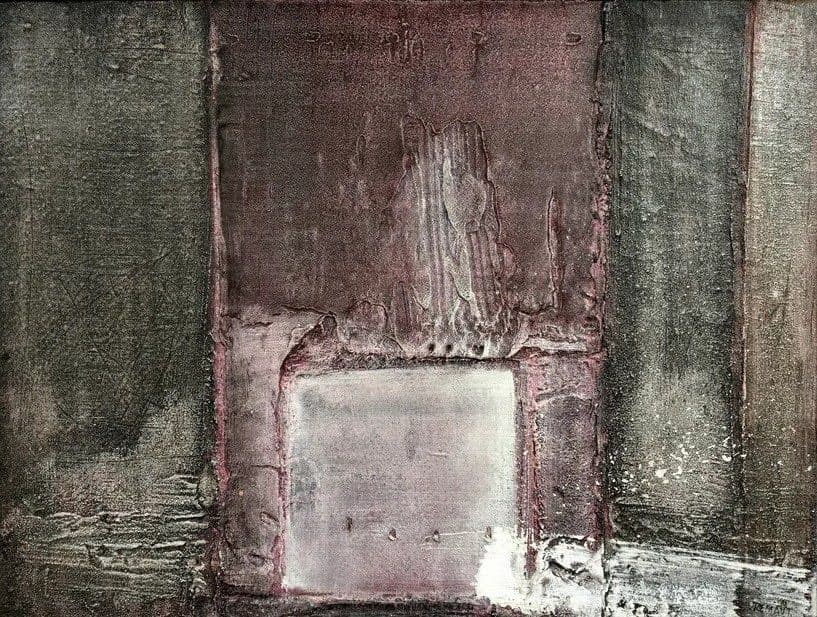
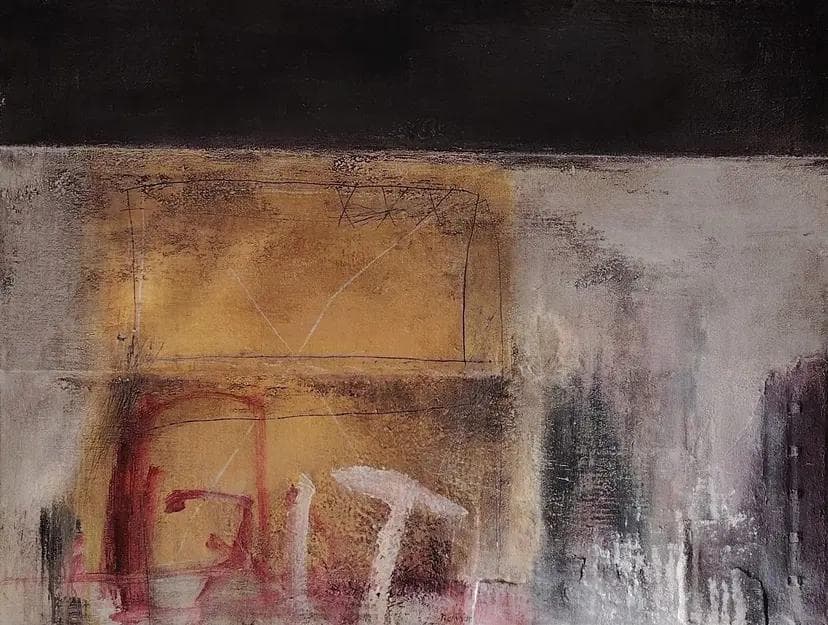
For more than five decades, Roger Remaut has developed a sustained and rigorous practice as a painter and mixed-media artist. Rooted in abstraction and material exploration, his work is distinguished by an intense engagement with surface, texture, and the emotional charge of form. Through a long and consistent exhibition history, institutional recognition, and scholarly attention, Remaut has established a durable position within Belgian contemporary art and its international extensions.
Early Recognition and Professional Emergence
Remaut emerged within the Belgian art scene in the early 1980s, a period marked by rapid professional validation. Between 1982 and 1985, he was selected for several respected national painting prizes, including the Prijs Schilderkunst (Harelbeke, 1982; Aarschot, 1985), the Hoppeprijs (Poperinge, 1983), and the Gaverprijs (Waregem, 1984). These selections signalled early recognition of a distinct artistic language and positioned him within a generation of painters committed to expressive abstraction and material experimentation.
His professional debut came in 1982 with solo exhibitions at Galerie De Peperbusse in Ostend and Galerie Onder de Toren in Veurne. Throughout the 1980s, Remaut maintained an active solo exhibition programme across Belgium, with presentations in Ostend, Gent, Mechelen, Kortrijk, and other cultural centres. During this period, he became a regular exhibitor at influential Flemish galleries such as Galerie De Peperbusse, Galerie Dialoog, and Galerie Tres, spaces known for their engagement with progressive contemporary practices.
Institutional Recognition and Canonical Context
By the early 1990s, Remaut’s practice had matured into a coherent and recognisable body of work, leading to significant institutional recognition. In 1990, his work entered the collection of the Museum of Fine Art, Ostend, marking a pivotal moment in his career. Further acquisitions followed by the Belgian Government, the Flemish Provincial Government, and the Office of the Minister of Internal Affairs, affirming his position within public collections and cultural institutions.
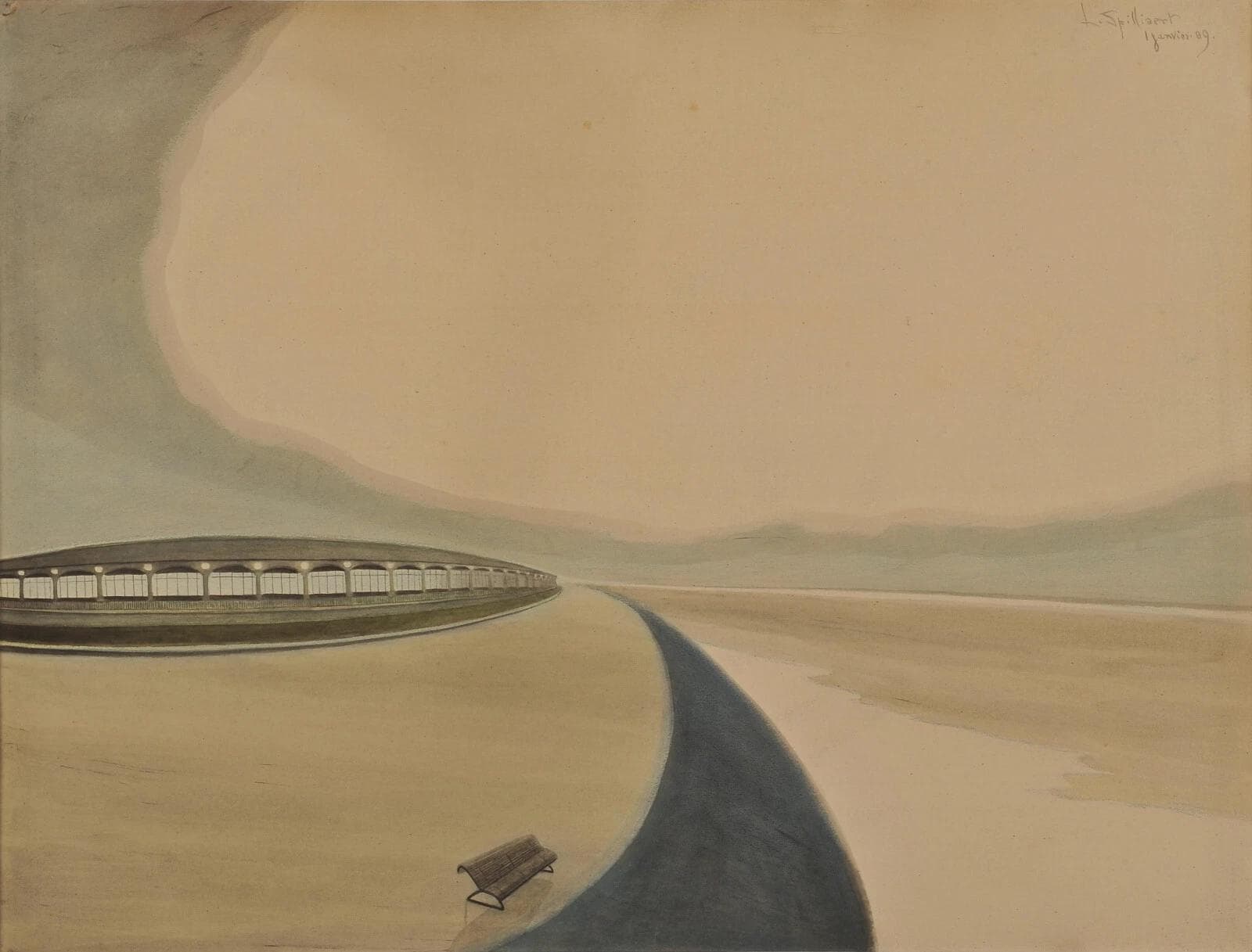
A defining moment in this phase of his career was his participation in the exhibition Artists from the Coast at Group 2 Gallery, Brussels, where his work was presented alongside that of James Ensor, Léon Spilliaert, and Constant Permeke. This contextual placement within a lineage of historically significant Belgian artists represented a formal acknowledgment of Remaut’s contribution to the visual culture of the coastal region and to Belgian modernism more broadly.
International Expansion
In 1997, Remaut relocated to the United Kingdom, initiating a period of increased international engagement. From the late 1990s onward, his work was exhibited in the Netherlands, France, Germany, and the United Kingdom, extending his presence beyond Belgium while maintaining continuity in his artistic direction.
Between 1998 and 1999, he held exhibitions in Amsterdam, Quimper, and several venues across England, including the Beecroft Art Gallery and Chambers Gallery. His participation in interdisciplinary and international events such as the Norwich Film & Multimedia Festival and the BP Arts Festival (Canvey Island) reflected a flexibility of medium and context, without departing from the material concerns that define his practice.
Critical Attention and Scholarly Documentation
Remaut’s work has been the subject of sustained critical attention. His exhibitions were featured in numerous radio and television broadcasts, notably on BRT2 and TV Focus, contributing to his public visibility in Belgium during the height of his exhibition activity.
Scholarly engagement with his work is evidenced by its inclusion in key reference publications by Norbert Hostyn, art historian and former curator of the Museum of Fine Art Ostend. Remaut is discussed in Beeldend Oostende (1993) and 40 Oostendse Kunstenaars (2008), publications that situate his work within the broader artistic heritage of Ostend and Flanders. International coverage followed with features in Art Bulletin Magazine (Ireland, 1994) and Gallery 24 (Berlin, 2005).
Archival documentation of Remaut’s oeuvre is preserved at MUZEE Ostend, ensuring long-term scholarly access and institutional continuity.
Exhibition Practice and Continuity
Roger Remaut’s career encompasses 36 solo exhibitions and 42 group exhibitions, reflecting a sustained commitment to both individual presentation and collective artistic dialogue. His works have been shown in public institutions, cultural centres, and independent galleries across Belgium, the Netherlands, France, the United Kingdom, and Germany.
Notable exhibitions include the Watou Arts Festival (2000), the International Assemblage Exhibition in Berlin (2005), and presentations at Cultural Centre De Branding, Middelkerke (2007). In recent years, his work has continued to be exhibited in Ostend, including at Square 42 Gallery and Galerie de Feniks, alongside major solo presentations.
Current Practice and Representation
Remaut’s recent solo exhibition Make Art Not War at Xochi Art Gallery reaffirmed the social and ethical dimensions of his work, demonstrating the continued relevance of his material practice within contemporary discourse. The exhibition highlighted his long-standing engagement with themes of conflict, human vulnerability, and resistance through abstraction.
He is currently represented by Xochi Art Gallery, where his work continues to be presented to an international audience of collectors and institutions.
Collections and Legacy
Roger Remaut’s works are held in public and private collections throughout Europe and the United States. Beyond institutional holdings, his long-standing connection to Ostend — historically associated with artists such as Ensor and Spilliaert — situates him within a tradition of artists concerned with psychological depth, material presence, and existential inquiry.
Never miss a Feature.
Exhibitions • Interviews • News
Est. 2024