Xochi Magazine.
By Gallery Founder Belinda Levez
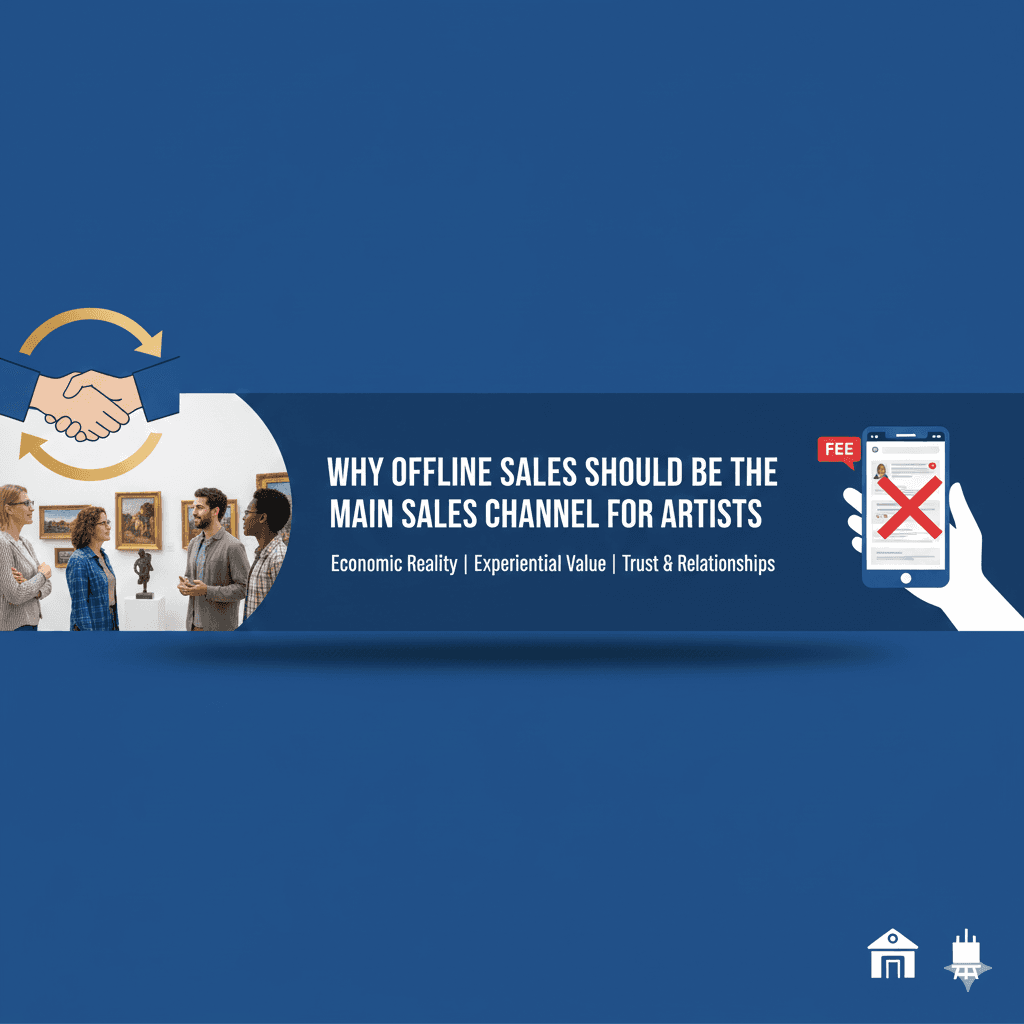
Why Offline Sales Should Be the Main Sales Channel for Artists
Author
Belinda Levez
Published
Dec 2025
Share
Why Offline Sales Should Be the Main Sales Channel for Artists
In an era dominated by digital platforms, e-commerce marketplaces, and social media promotion, it is widely assumed that online sales represent the most effective and scalable path for artists to reach audiences and generate income. While online channels undeniably provide visibility and convenience, this prevailing assumption overlooks the unique economic, psychological, and relational advantages of offline sales. For many artists—particularly visual artists, craftspeople, photographers, sculptors, and mixed-media practitioners—offline sales should not merely supplement online activity but instead function as the primary sales channel.
Offline sales enable artists to retain control over pricing, presentation, and narrative while fostering direct, human-centered relationships with buyers. They reinforce the intrinsic value of art as a physical, experiential object rather than a commoditized digital listing competing in an algorithm-driven marketplace.
The Economic Reality of Online Marketplaces
Online platforms promise global reach, but that reach comes at a substantial cost. Marketplace fees, payment processing charges, advertising expenses, shipping costs, and return policies collectively erode profit margins. Artists often discover that a significant percentage of each sale is captured by intermediaries rather than retained as income.
Additionally, online environments foster price competition. Consumers accustomed to comparing dozens of listings within seconds often prioritize price over artistic merit, originality, or craftsmanship. This dynamic pressures artists to underprice their work in order to remain competitive, which can lead to unsustainable business models and creative burnout.
Offline sales, by contrast, eliminate or drastically reduce intermediary costs. Whether selling at galleries, art fairs, studios, pop-up exhibitions, or private showings, artists maintain greater control over pricing and retain a larger share of revenue per sale. Higher per-unit margins often compensate for lower sales volume, resulting in more stable and predictable income.
Art Is a Physical and Experiential Product
Art is not merely a product; it is an experience. Texture, scale, depth, materiality, and presence are critical elements that cannot be fully conveyed through digital images. Screens flatten three-dimensional works, distort color accuracy, and strip away tactile qualities that influence emotional response and perceived value.
Offline sales environments allow audiences to encounter art as it was intended to be experienced. Standing in front of a painting, holding a ceramic vessel, or walking around a sculpture creates a sensory engagement that significantly increases appreciation and willingness to purchase. Buyers are not simply evaluating an object; they are responding to an embodied experience.
This experiential dimension is one of the strongest arguments for prioritizing offline sales. When buyers emotionally connect with a work in a physical space, purchasing becomes a natural extension of that connection rather than a transactional decision driven by convenience.
Trust, Authenticity, and Buyer Confidence
Trust is a decisive factor in art purchasing, particularly at higher price points. Online transactions inherently involve uncertainty regarding quality, authenticity, condition, and fulfillment. Even with detailed descriptions and professional photography, buyers must rely on representations rather than firsthand experience.
Offline sales reduce this uncertainty. Buyers can inspect works directly, ask questions in real time, and develop confidence in both the artwork and the artist. This transparency significantly lowers perceived risk and increases conversion rates, especially for original works and limited editions.
Moreover, meeting the artist in person enhances authenticity. Buyers often value the story behind a work as much as the work itself. Conversations about inspiration, process, and intention create a narrative context that strengthens emotional attachment and reinforces the artwork’s uniqueness.
Relationship Building and Long-Term Patronage
Offline sales foster direct relationships that extend beyond a single transaction. When artists engage with collectors face-to-face, they establish personal rapport that can lead to repeat purchases, commissions, referrals, and long-term patronage.
Collectors who meet artists in person are more likely to follow their careers, attend future exhibitions, and advocate for their work within personal and professional networks. These organic relationships are difficult to replicate online, where interactions are brief, transactional, and often anonymous.
Over time, a strong offline collector base becomes one of an artist’s most valuable assets. It provides stability during market fluctuations, reduces dependence on algorithmic visibility, and creates opportunities for private sales that are both financially and creatively rewarding.
Brand Positioning and Perceived Value
The channel through which art is sold directly influences how it is perceived. Online marketplaces often position artworks alongside mass-produced items, prints, and decorative products, regardless of quality or intent. This proximity can inadvertently diminish perceived value and undermine an artist’s brand.
Offline venues such as galleries, curated fairs, studios, and cultural institutions confer contextual legitimacy. The physical environment communicates seriousness, selectivity, and professionalism. Buyers interpret these signals subconsciously and adjust their valuation accordingly.
By prioritizing offline sales, artists position their work within a framework of scarcity and significance rather than abundance and disposability. This positioning supports higher price points and reinforces the notion that art is an investment—culturally, emotionally, and financially.
Creative Autonomy and Artistic Integrity
Online platforms often incentivize content optimization over artistic exploration. Algorithms reward frequency, trend alignment, and engagement metrics rather than depth, experimentation, or conceptual rigor. Artists may feel pressured to produce work that performs well online rather than work that aligns with their long-term vision.
Offline sales environments place fewer constraints on creative direction. Artists can present cohesive bodies of work without fragmenting them into scrollable content or adapting them to platform-specific formats. This autonomy supports artistic growth and encourages risk-taking, which is essential for meaningful career development.
Furthermore, offline sales reduce the temptation to commoditize every piece of work. Not all art needs to be immediately sellable or digitally marketable. Maintaining a distinction between creative practice and promotional activity helps preserve artistic integrity and motivation.
Reduced Dependency on Volatile Platforms
Digital platforms are inherently unstable. Algorithms change, accounts are suspended, marketplaces shut down, and policies evolve without regard for individual sellers. Artists who rely primarily on online sales are exposed to systemic risks beyond their control.
Offline sales diversify risk by grounding income in tangible, locally anchored channels. Relationships with galleries, collectors, institutions, and communities are not subject to sudden algorithmic shifts. While offline opportunities also fluctuate, they are generally more predictable and resilient over time.
This stability is particularly important for artists seeking sustainable careers rather than short-term visibility. Building offline infrastructure may require more upfront effort, but it yields greater long-term security.
Community Engagement and Cultural Impact
Art does not exist in isolation; it is embedded within communities and cultural ecosystems. Offline sales inherently encourage community engagement through exhibitions, openings, workshops, and events. These interactions contribute to local cultural vitality and position artists as active participants rather than distant content producers.
Engaging with local audiences also provides valuable feedback and inspiration. Conversations with viewers reveal how work is interpreted, what resonates, and what questions it raises. This dialogue enriches artistic practice and reinforces the social relevance of art.
From a broader perspective, offline sales help sustain cultural spaces such as galleries, art centers, and independent venues. By participating in these ecosystems, artists contribute to a healthier, more diverse art economy.
Practical Scalability Without Mass Production
A common argument in favor of online sales is scalability. However, scalability in art should not be equated with mass production. Most artists are constrained by time, capacity, and creative energy. Producing more work simply to meet online demand can compromise quality and well-being.
Offline sales support a form of scalable growth that is aligned with artistic realities. Higher prices, commissions, and repeat collectors allow artists to earn more without producing exponentially more work. This model prioritizes value over volume and sustainability over expansion.
Additionally, offline success often creates selective online opportunities, such as institutional partnerships or curated digital exhibitions, rather than reliance on open marketplaces.
Integrating Online Tools Without Replacing Offline Sales
Advocating for offline sales as the primary channel does not require rejecting digital tools entirely. Online platforms can effectively support offline activity by showcasing portfolios, announcing exhibitions, documenting past work, and maintaining contact with collectors.
In this model, online presence functions as infrastructure rather than a storefront. It directs attention toward physical experiences and personal relationships instead of replacing them. This balanced approach allows artists to benefit from digital visibility without surrendering control over sales dynamics.
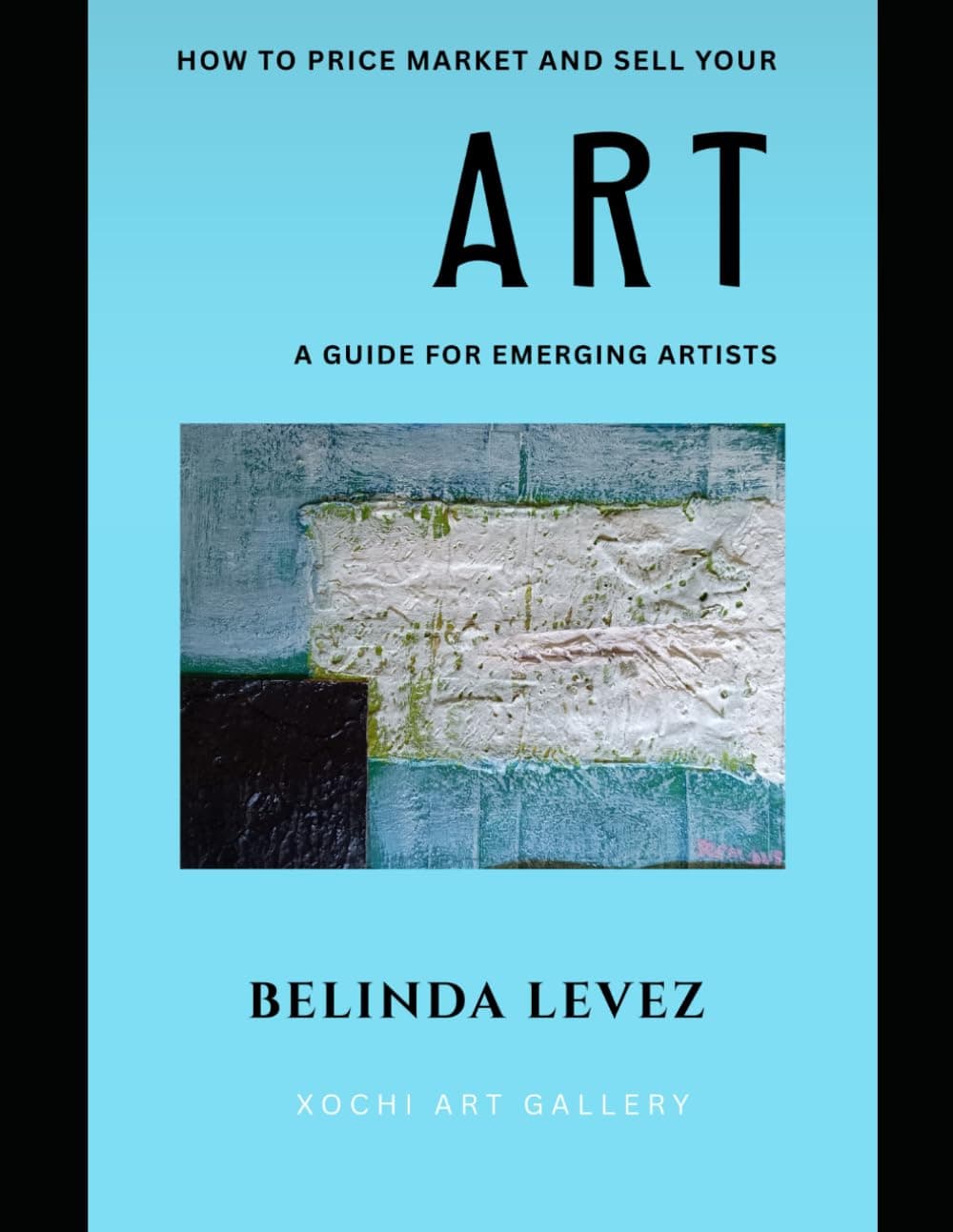
How to Price, Market and Sell Your Art
Ready to take your art career to the next level? This comprehensive guide by Belinda Levez offers practical strategies for emerging artists ready to grow.
Never miss a Feature.
Exhibitions • Interviews • News
Est. 2024