When Art Is Architecture: Designing Buildings Around the Collection
Art should never be an afterthought in building design. Architects need to consider it from the outset to avoid expensive retrofits and compromised installations. A museum-quality art collection deserves more than a wall to hang on. Decisions around structure, lighting, climate, sightlines and installation need to be made early in the project. This article explores how architects can design buildings with museum-quality art in mind, creating spaces where architecture and art work together as an integral part of the experience.
Belinda Levez · 16 Sept 2026
For architects, the design of a building is typically driven by structural grids, spatial flow, natural light, programmatic requirements, and aesthetic branding. Yet, when a building is intended to house a significant collection of fine art, a critical layer of intent must be woven into the very DNA of the project from day one. Too often, art is treated as an afterthought, a decorative veneer applied after the scaffolding comes down, resulting in costly retrofits, compromised installations, and missed architectural opportunities.
Every artwork creates five architectural requirements: load, attachment, environment, light, and access. Integrating fine art into a building from the beginning of a project transforms the architecture from a passive container into an active, protective, and complementary partner to the collection. This comprehensive guide explores how architects can design buildings with fine art in mind.
Designing Walls for Fine Art and Art Installations
The foundation of any art-integrated building begins behind the drywall. Fine art particularly large-scale paintings, cast bronzes, mixed-media installations, and stone reliefs, possesses substantial weight that standard commercial drywall and light-gauge steel studs cannot support.
Structural Wall Backing for Heavy Artwork
Standard office construction typically utilizes thin gypsum board over light metal studs spaced 16 or 24 inches apart. This configuration is structurally inadequate for serious art installations. When designing a building with art in mind, the architectural and structural engineers must collaborate early to specify heavy-duty backing.
- Continuous Plywood Substrates: Behind every finished wall surface intended for art display, specify continuous structural-grade plywood or other engineered backing appropriate to the anticipated loads installed directly behind the gypsum board. This creates a continuous shear plane, allowing curators and installers to secure heavy fixtures anywhere on the wall without needing to locate a hidden stud.
- Upgraded Stud Framing: Where plywood is not used, structural steel studs should be heavy-gauge (minimum 16-gauge) or reinforced with solid wood blocking inserted continuously between studs at standard gallery hanging heights (typically spanning from 3 feet to 10 feet above finished floor level).
French Cleats and Secure Art Mounting Systems
A common failure in commercial and corporate art display is the reliance on picture rails and hanging systems that suspend art from nylon cords or steel cables. While flexible, suspended systems introduce several severe drawbacks:
Pendulum Effect: Suspended artworks are susceptible to air currents, HVAC drafts, and seismic tremors, causing them to swing, tilt, or drift out of alignment.
Aesthetic Clutter: Visible cords or wires distract from the clean lines of the architecture and the composition of the artwork.
Load Limitations: Cords place eccentric loads on picture moldings, which can fail under high tension or heavy weights.
Instead, buildings should be engineered to accept direct, rigid mechanical fasteners. Art handling often involves engineered cleats, Z-clips, proprietary museum mounting systems, structural anchors, seismic restraints, or custom hardware. French cleats are often used to hang paintings. A French cleat consists of two interlocking 45-degree bevels, one attached to the back of the artwork frame, and the corresponding reverse bevel secured directly into the reinforced wall substrate.
By designing walls with continuous plywood backing or heavy blocking, installers can screw French cleats directly into the wall structure at multiple points. This distributes the weight evenly, locks the artwork rigidly against the wall plane so it hangs completely plumb, and provides immense load-bearing capacity capable of supporting hundreds of pounds safely.
Structural Engineering for Heavy Artwork and Sculptures
Fine art is deceptively heavy. While a framed canvas may appear light, large-scale contemporary works such as multi-panel oil paintings, textured impasto surfaces encased in heavy custom frames, cast iron sculptures, or multi-media assemblages can weigh anywhere from 150 to over 1,000 pounds. Furthermore, three-dimensional wall sculptures and cantilevered installations exert dynamic downward and pulling forces on the building envelope.
Engineering Load Paths for Large Art Installations
Coordinating with structural engineers allows point loads for major art walls to be calculated.
- Floor-to-Ceiling Load Paths: For monumental sculptures or exceptionally heavy stone and ceramic wall reliefs, the dead load must be transferred down to the subfloor or foundation. Floor slabs in designated gallery corridors, double-height lobbies, and executive suites should be engineered with higher live-load capacities.
- Structural Steel Support for Monumental Artwork : For massive hanging pieces, pre-engineered concealed steel backing plates welded directly to the building's primary structural columns or beam flanges can be added, bridging the gap behind the drywall. This allows a multi-ton wall-mounted installation to anchor directly into the building's structural skeleton rather than relying solely on secondary framing.
Designing Architectural Spaces Around Fine Art
Art does not merely occupy space; it defines it. Designing a building with art in mind requires a deep understanding of human movement, visual axes, and spatial hierarchy. Sightlines must be deliberately manipulated to create moments of surprise, revelation, and contemplation.
Planning Sightlines for Artwork
Primary sightlines should be mapped out during the schematic design phase. A visitor entering a building should not immediately see a chaotic vista; rather, their eye should be guided along calculated sightlines toward focal points designed specifically to anchor major works of art.
- Creating Terminal Vistas for Art Displays : Long corridors, axial hallways, and elevator lobbies should terminate in solid, beautifully lit feature walls designed to house significant artworks. These terminal vistas draw people through the space organically.
- Threshold Transitions: Transitions between public and private zones—such as passing from a low-ceilinged elevator lobby into a soaring executive reception area—should frame artworks like portals, utilizing compression and expansion of space to heighten the emotional impact of the piece.
Where to Display Monumental Artwork in a Building
Not all spaces are created equal when it comes to housing art. Monumental, museum-quality pieces require volumetric scale, optimal lighting, and high-status placement to command the room properly.
Designing Lobby Spaces for Fine Art
The lobby is the public face of the building—a grand threshold that establishes corporate identity and architectural ambition.
- Scale and Proportion: Lobbies often feature double- or triple-height volumes, making them the ideal setting for monumental hanging sculptures, soaring vertical canvases, or large-scale digital installations.
- The "Hero" Wall: Designate the primary wall visible from the main entrance as a dedicated anchor zone. This wall should be free of doors, windows, and heavy architectural articulation so that a masterwork can read clearly from a distance.
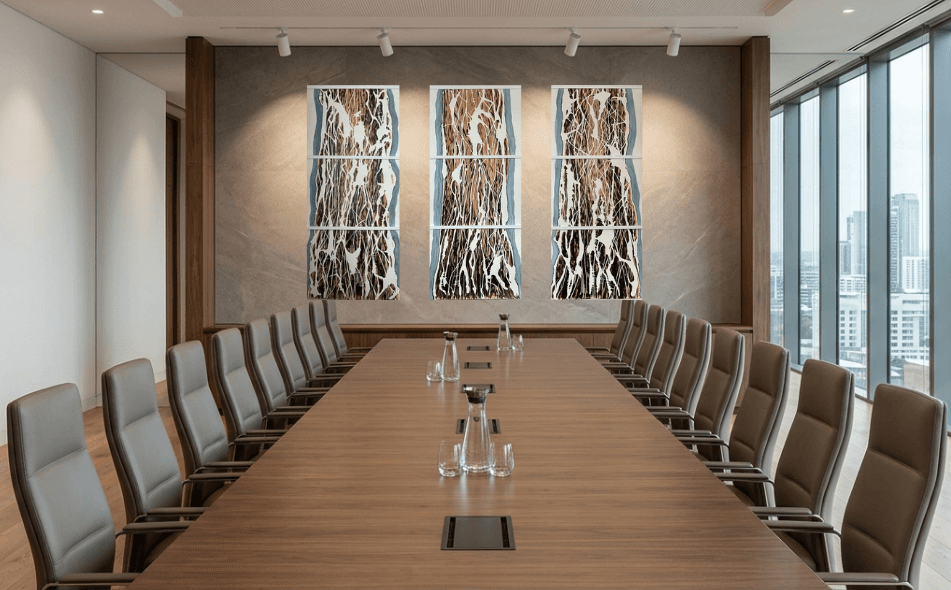
Art Placement in Boardrooms
The boardroom is a space of gravity, decision-making, and prestige. Art here should project confidence, intellectual depth, and vision.
- Acoustic and Visual Integration: Boardrooms require careful management of acoustics (wood paneling, acoustic plaster, or fabric wraps). Art walls in boardrooms must be coordinated with acoustic treatments so that hanging systems do not interfere with sound absorption panels.
- Placement Relative to Seating: Monumental pieces should be positioned on the primary wall facing the head of the table or along the main lateral wall where they remain in the peripheral or direct vision of participants, serving as a silent witness to high-level discourse.
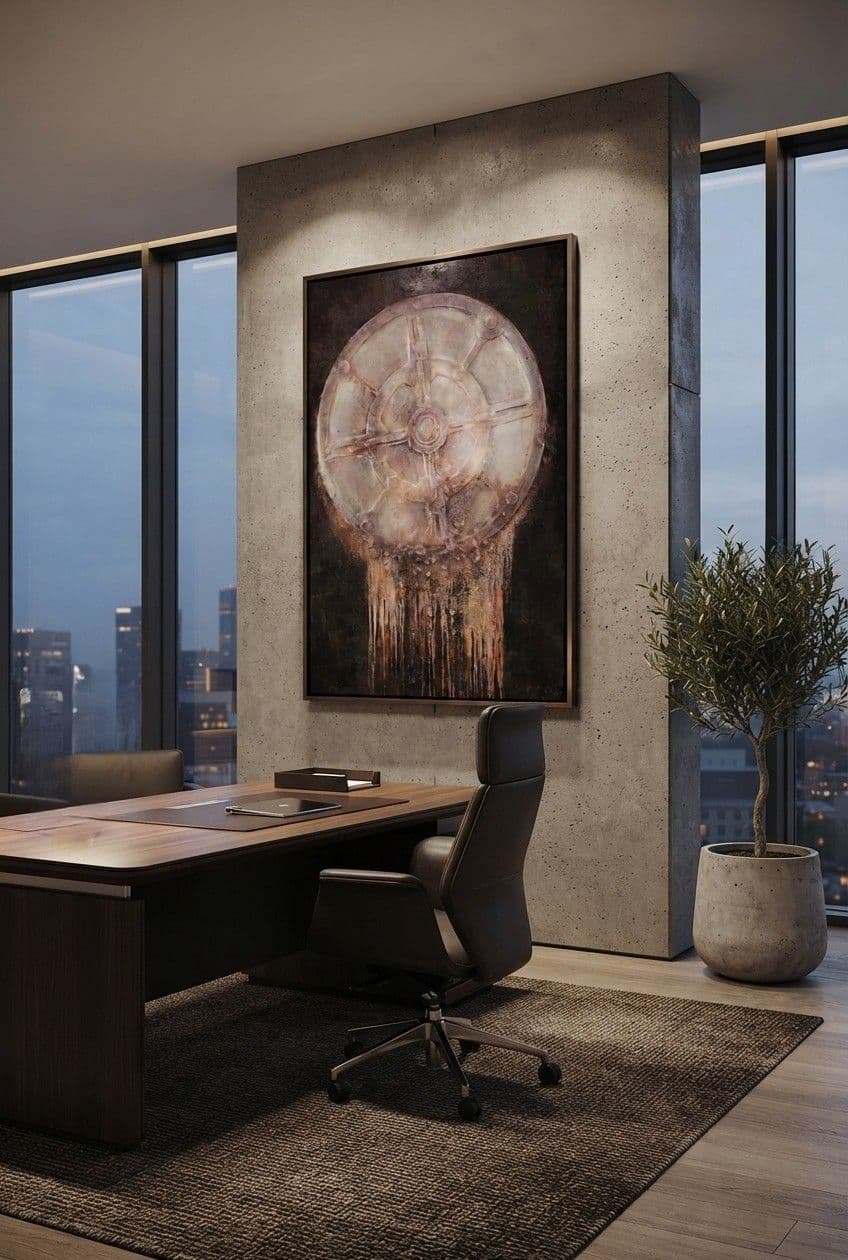
Displaying Artwork in Executive Offices
Executive offices require art that balances personal introspection with executive presence.
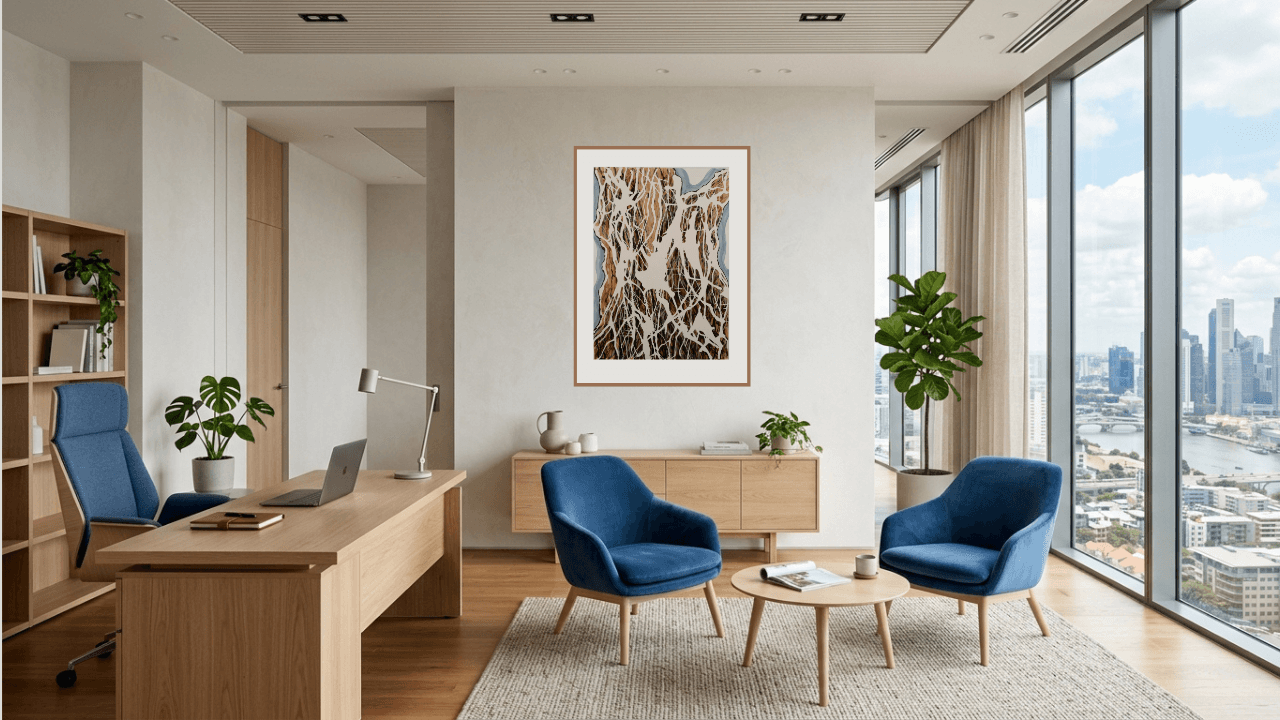
- Power Walls: The wall directly behind or opposite the executive desk serves as the prime location. It forms the backdrop for video conferences, client meetings, and private contemplation.
- Lighting Synergy: In executive offices, the art placement must coordinate with daylighting strategies, ensuring that fragile works on paper or sensitive canvases are protected from direct UV exposure while still receiving optimal grazing or accent illumination.
Designing Stone, Marble, and Masonry Walls for Artwork
One of the most common pitfalls in corporate and high-end architectural design is the extensive use of unyielding, high-end hard finishes—such as polished marble, limestone, granite, and glazed tile. While these materials exude luxury, they present a nightmare for art curation.
The Challenges of Mounting Art on Stone and Marble
- Drilling Impossibility: Drilling into marble, travertine, or granite slabs to mount art hardware risks catastrophic cracking, shattering, or expensive slab replacement.
- Reflectivity and Glare: Highly polished stone acts as a mirror, creating distracting reflections of interior lighting and windows that obliterate the visual integrity of framed artwork.
- Permanence: Once stone is installed, modifying anchor points or changing out exhibition layouts becomes virtually impossible.
Architectural Solutions for Art Display on Hard Finishes
If an architectural design calls for stone or masonry walls in prominent locations where art is desired, the architect must plan for this paradox from the outset:
- Concealed Shadow Gaps and Reveal Joints: Design stone panels with modular reveal joints or metal shadow gaps. By engineering structural hanging clips that lock into these hidden reveals, installers can suspend art cables or brackets without drilling a single hole into the stone face.
- Hybrid Wall Assemblies for Fine Art : Create dual-layer walls where a recessed central panel is finished in wood, specialized high-durability acoustic plaster, or fabric wallcovering, framed by a border of rich marble. This provides a dedicated "safe zone" for art anchoring while retaining the luxurious perimeter aesthetic of stone.
- Freestanding Partition Walls: Instead of hanging art on perimeter stone walls, design architectural partitions finished in gallery-white plaster or wood paneling that sit parallel to the stone walls. This creates spatial layering, depth, and a clean, drillable surface without compromising the stone architecture.
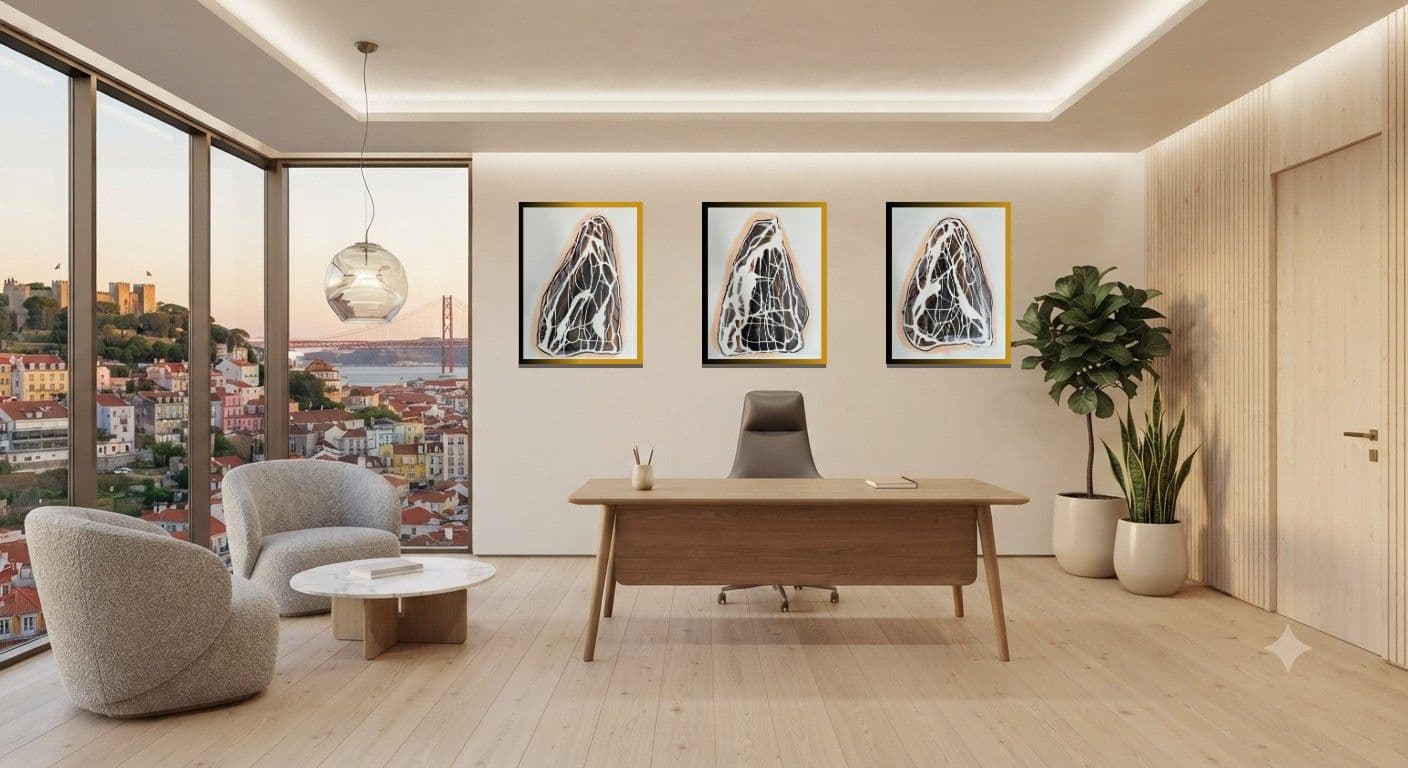
Protecting Fine Art from HVAC, Heat, Humidity, and Water
Fine art is intensely sensitive to its environmental microclimate and surrounding infrastructure. Organic materials—such as canvas, wood paneling, paper, and animal glues—are hygroscopic, expanding and contracting with fluctuations in temperature, humidity, and direct moisture exposure. Integrating art successfully requires close collaboration with MEP (Mechanical, Electrical, and Plumbing) engineers from the earliest planning stages.
Managing Heat and Airflow Around Artwork
- Thermal Shock and Warping: Artworks must never be hung directly above or adjacent to radiators, baseboard heaters, or forced-air heating vents. Rapid thermal shifts cause wood stretcher bars and custom frames to warp, crack, or split, while canvas tautness fluctuates dramatically, leading to paint flaking and structural degradation. Heating zone layouts should be mapped to ensure perimeter walls designated for art remain thermally neutral zones, keeping heat emitters entirely separate from display surfaces.
- HVAC Design for Fine Art Collections : Mechanical engineering must also account for air velocity. Air conditioning diffusers should never be positioned to blast chilled or dehumidified air directly onto an art wall. Direct, high-velocity airflow accelerates moisture loss in organic materials, creates localized thermal stress, and introduces excessive vibration. Supply and return diffusers must be strategically placed in central ceiling zones or perimeter coves that gently wash the space with conditioned air without impinging directly upon the paintings and sculptures below.
Protecting Art from Plumbing Hazards
Beyond thermal and airflow management, the invisible mechanical infrastructure of a building poses one of the most devastating threats to fine art: water. A ruptured pipe, a leaking supply line, a backing-up condensation drain, or a faulty fire sprinkler valve can instantly ruin priceless canvases, works on paper, and wood framing.
- Routing Plumbing Away from Display Zones: By co-ordinating with MEP engineers, architects can coordinate plumbing layouts so that water supply lines, drain pipes, and vertical risers are not routed through or directly behind primary art-display walls. Bathrooms, kitchens, mechanical wet walls, and vertical wet stacks should be strictly segregated from designated art corridors, lobbies, and executive display zones.
- Fire Sprinkler Design and Fine Art Protection: While building codes require fire sprinkler systems, standard wet-pipe sprinkler heads directly above major art installations introduce severe risk. By coordinating with fire protection engineers the design can include careful head placement that ensures water is not discharged directly onto primary art collection walls in the event of a false alarm or fire.
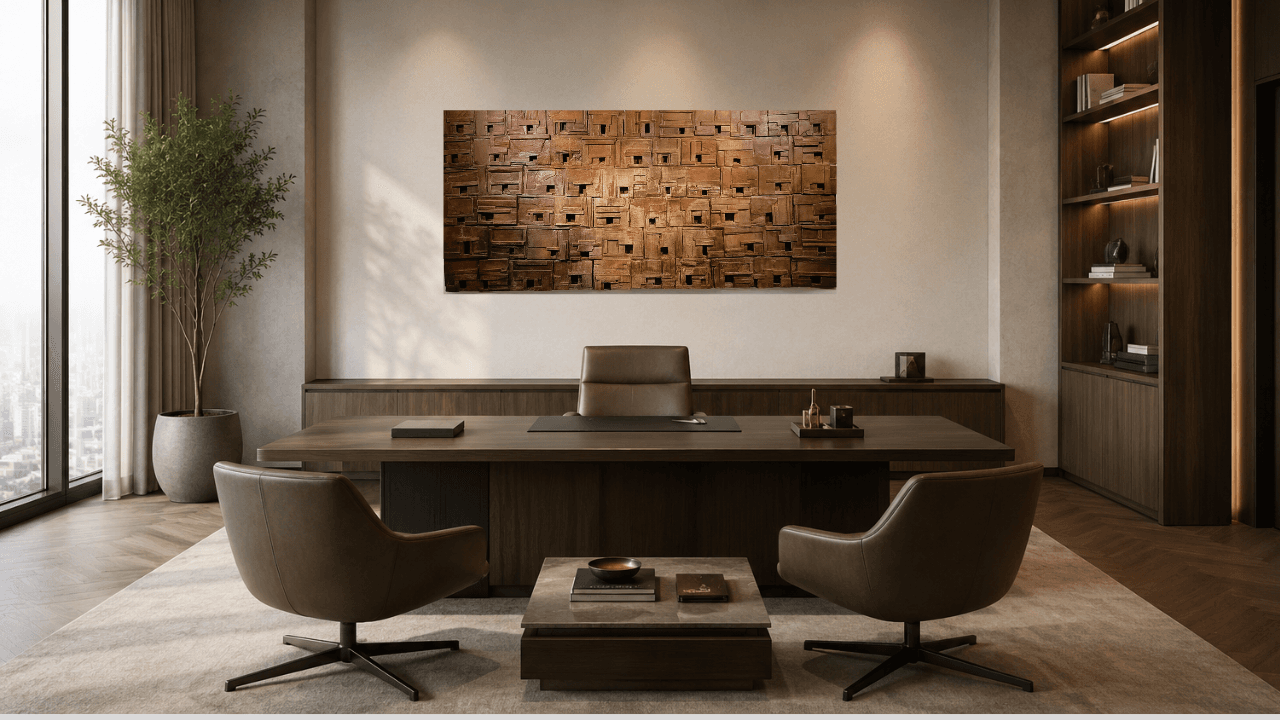
Lighting, Power, and Building Infrastructure for Fine Art
Art cannot exist in the dark, nor can it thrive in poorly conditioned spaces. The invisible infrastructure of a building—its electrical, mechanical, and architectural detailing—must be meticulously coordinated around the art plan.
Museum-Quality Lighting for Artwork
Natural and artificial light can make or break an art collection. Ultraviolet (UV) radiation fades pigments, breaks down binders, and destroys paper and canvas over time.
- UV Protection and Daylight Control for Art Collections : All architectural glazing along facades exposed to sunlight must feature high-performance low-E, UV-filtering interlayers to protect interior art collections.
- Layered Artificial Lighting: General ambient lighting washes out art. Designs can incorporate dedicated, recessed accent lighting circuits utilizing narrow-beam, high-CRI (Color Rendering Index > 95) LED track or gimbal fixtures.
- The 30-Degree Rule: Recessed ceiling fixtures should be placed so that the center beam of light strikes the center of the artwork at a 30-degree angle from the vertical. This eliminates harsh glare on glass-framed pieces and prevents the viewer's shadow from falling onto the work.
Electrical and Data Infrastructure for Art Installations
Nothing ruins the clean contemplation of a fine art piece faster than a dangling black power cord or an awkwardly placed double-gang electrical outlet cutting across the composition.
- Concealed Floor and Wall Power: lluminated artworks, digital canvases, or motorized kinetic sculptures may need floor boxes and recessed low-voltage wall boxes positioned directly behind the intended art placement zone.
- Smart Building Integration: Run conduit for data and power to key art locations to support digital art displays, interactive installations, or motorized solar shading systems that protect sensitive works.
Furniture Planning and Artwork Protection
Architectural layout must anticipate furniture placement relative to art walls.
- Clearance and Scale: Sofas, credenzas, and executive desks placed against art walls must be coordinated in scale. Console tables placed beneath art should match or complement the width of the piece above it.
- Traffic Flow: Ensure that furniture configurations do not encourage people to lean against, brush past, or crowd monumental artworks, maintaining a respectful physical buffer zone inherent to the room's spatial layout.
Integrating Fine Art into Architecture from Day One
Designing a building with fine art in mind from the very beginning is an exercise in holistic architectural thinking. It requires the architect to look beyond the structural shell and envision the human experience within the space—an experience deeply enriched by cultural artifacts and masterworks.
By reinforcing walls with heavy-duty substrates, prioritizing rigid French cleat mounting systems over unstable nylon cords, engineering load paths for monumental sculptures, intelligently navigating the limitations of stone and marble, protecting collections from thermal extremes, HVAC drafts, and plumbing hazards, and coordinating lighting and electrical infrastructure from day one, architects can create timeless, resilient spaces. In these buildings, art is not merely an accessory added at the eleventh hour; it is an intrinsic, enduring pillar of the architectural narrative.
Belinda Levez is Co-Founder and Owner of Xochi Art Gallery in Portugal, where she specialises in museum-quality art leasing and full-service corporate art management. With more than 30 years' experience as an author and art-industry professional, she manages corporate collections, artist development and contemporary art collecting.
Looking for Exceptional Art for Your Business?
Xochi Corporate provides museum-quality contemporary art leasing and full-service corporate art management for businesses seeking to create meaningful, sophisticated environments. From curation and sourcing to professional installation and ongoing collection management, we manage every stage of the process.
Explore a more considered approach to art leasing with Xochi Corporate
Continue reading